
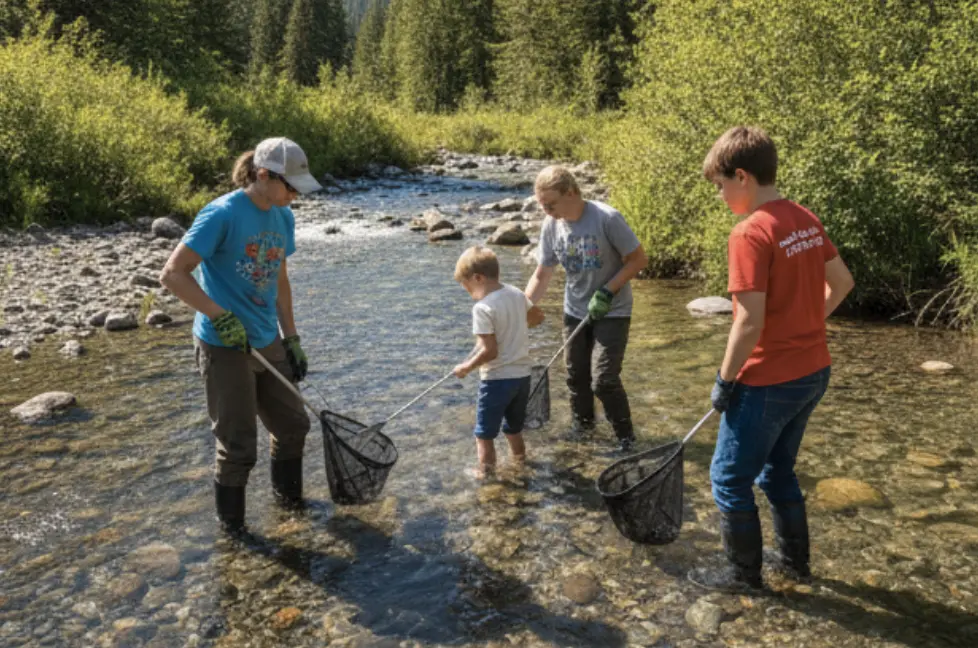
The annual Kokanee salmon enumeration is one of the most critical and long-standing programs of the Christina Lake Stewardship Society. For over a decade, our dedicated team of staff and volunteers has ventured out each fall to count the spawning Kokanee in our local creeks. This program is far more than a simple fish count; it is a vital scientific endeavour that provides a crucial snapshot of the health of our watershed. The Kokanee, as a keystone species, serves as a powerful barometer—their population trends tell us a story about the overall ecological integrity of Christina Lake.
Understanding Christina Lake’s Unique Kokanee Populations
Christina Lake is home to two distinct populations of Kokanee salmon, each with its own unique genetic heritage and ecological niche. Understanding these differences is fundamental to our conservation efforts.
The Two Distinct Kokanee Stocks
- Stream-Spawning Kokanee: This population spawns primarily in the tributaries that feed Christina Lake, such as Sandner Creek and McRae Creek. Genetic analysis has shown that these fish originated from Kootenay Lake and were introduced to our watershed through historical stocking programs.
- Shore-Spawning Kokanee: This remarkable population is genetically unique and represents the sole native salmon stock of Christina Lake. Unlike the stream-spawners, these fish complete their entire life cycle within the lake itself, spawning along specific shoreline areas. The protection of this distinct native stock is a top priority for our society.
The Science and Purpose of Kokanee Enumerations
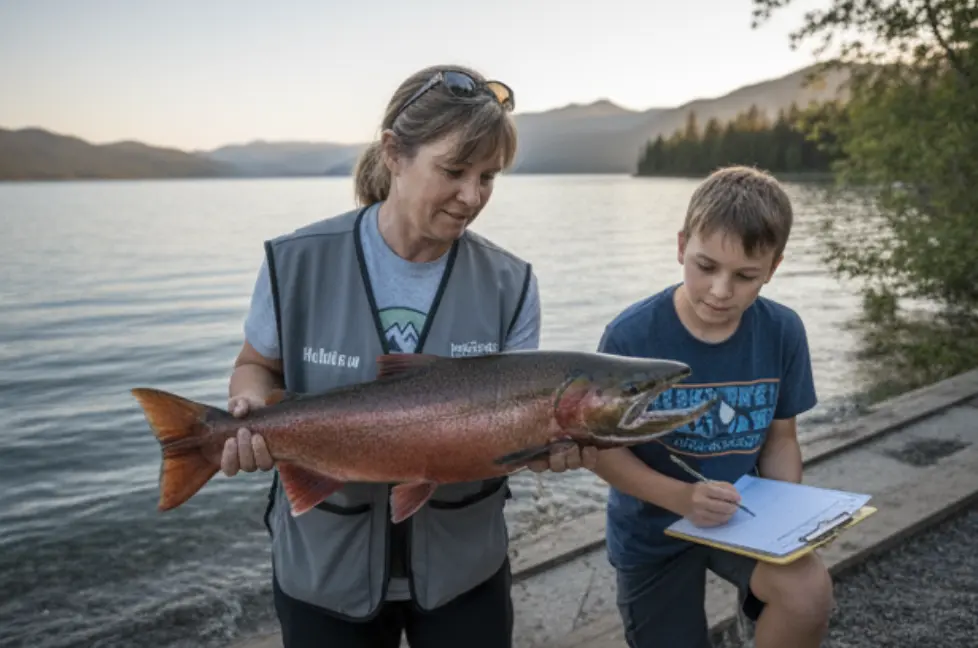
An “enumeration” is a systematic process of counting. Our program involves trained volunteers and staff physically walking the lengths of key spawning creeks to count both live spawning fish and those that have already spawned and died (carcasses). This data, collected consistently year after year, allows us to monitor and analyze critical population trends.
Join the fun with Chicken Road Сanada.
- Population Health Assessment: The total number of spawners is a primary indicator of the overall health and size of the Kokanee population.
- Understanding Life Cycles: Kokanee typically have a 3- to 4-year life cycle. By tracking the numbers annually, we can observe patterns and correlations. For example, a low spawning count in one year will often correspond to a similarly low count three or four years later, when that generation’s offspring return to spawn.
- Assessing Habitat Health: A decline in fish returning to a specific creek can signal a problem with that habitat, such as pollution, sedimentation from washouts, or physical barriers. This allows us to target our restoration efforts effectively.
- Observing Physical Characteristics: We also note the physical size and condition of the spawning fish. Larger-than-average fish can indicate lower population densities and less competition for food resources within the lake.
- Informing Management Decisions: Our long-term dataset is an invaluable resource for provincial fisheries biologists and government agencies, helping to inform responsible watershed management and fishing regulations.
A History of Challenges and Resilience
Our long-term data has captured the story of a resilient species facing numerous challenges. The Kokanee population in our creeks has demonstrated a remarkable ability to rebound, but it requires our ongoing vigilance and stewardship.
| Year/Period | Event | Impact on Kokanee Population | Stewardship Response & Recovery |
| Mid-2000s | A significant washout from the Kettle Valley Rail Trail into McRae Creek. | The massive influx of sediment severely degraded the spawning habitat, leading to a dramatic decline in the fish population in this critical creek. | Suspension of enumerations in the area for safety; long-term monitoring to track recovery. |
| 2006 | Unusually high bear activity along the spawning creeks. | For the safety of our volunteers, the annual enumeration was suspended for the year, creating a gap in our long-term dataset. | Implementation of enhanced bear-aware safety protocols for all future enumerations. |
| Post-Washout Years | Gradual natural clearing of sediment from McRae Creek. | It took several years for the population to show signs of recovery. The numbers of returning spawners slowly began to increase from near-zero levels. | Continued annual monitoring provided the data to confirm the slow but steady process of natural habitat recovery and population rebound. |
| Recent Years | The population in both McRae and Sandner Creeks continues to show an upward trend. | The creeks are once again supporting healthy spawning runs. For example, a recent count in Sandner Creek yielded the second-highest total ever recorded, with over 12,000 fish. | This success validates our long-term commitment to habitat protection and demonstrates the resilience of the ecosystem when given a chance to heal. |
How You Can Participate: Become a Volunteer Steward
The Kokanee Enumerations program is a true community effort and would not be possible without the passion and dedication of our volunteers. This is a unique opportunity to contribute directly to vital scientific research and to experience one of nature’s most incredible spectacles firsthand.
What to Expect as a Volunteer
- Training: All volunteers receive training on fish identification, counting methodologies, and safety protocols.
- The Experience: You will be part of a small team, trekking alongside beautiful creeks, over logs, and through stunning autumn landscapes.
- The Reward: The satisfaction of knowing you are playing a direct role in protecting a keystone species and the health of Christina Lake for future generations.
If you are interested in becoming a volunteer for our next Kokanee enumeration, please contact us. Your participation is a powerful act of stewardship and a memory you won’t soon forget.